
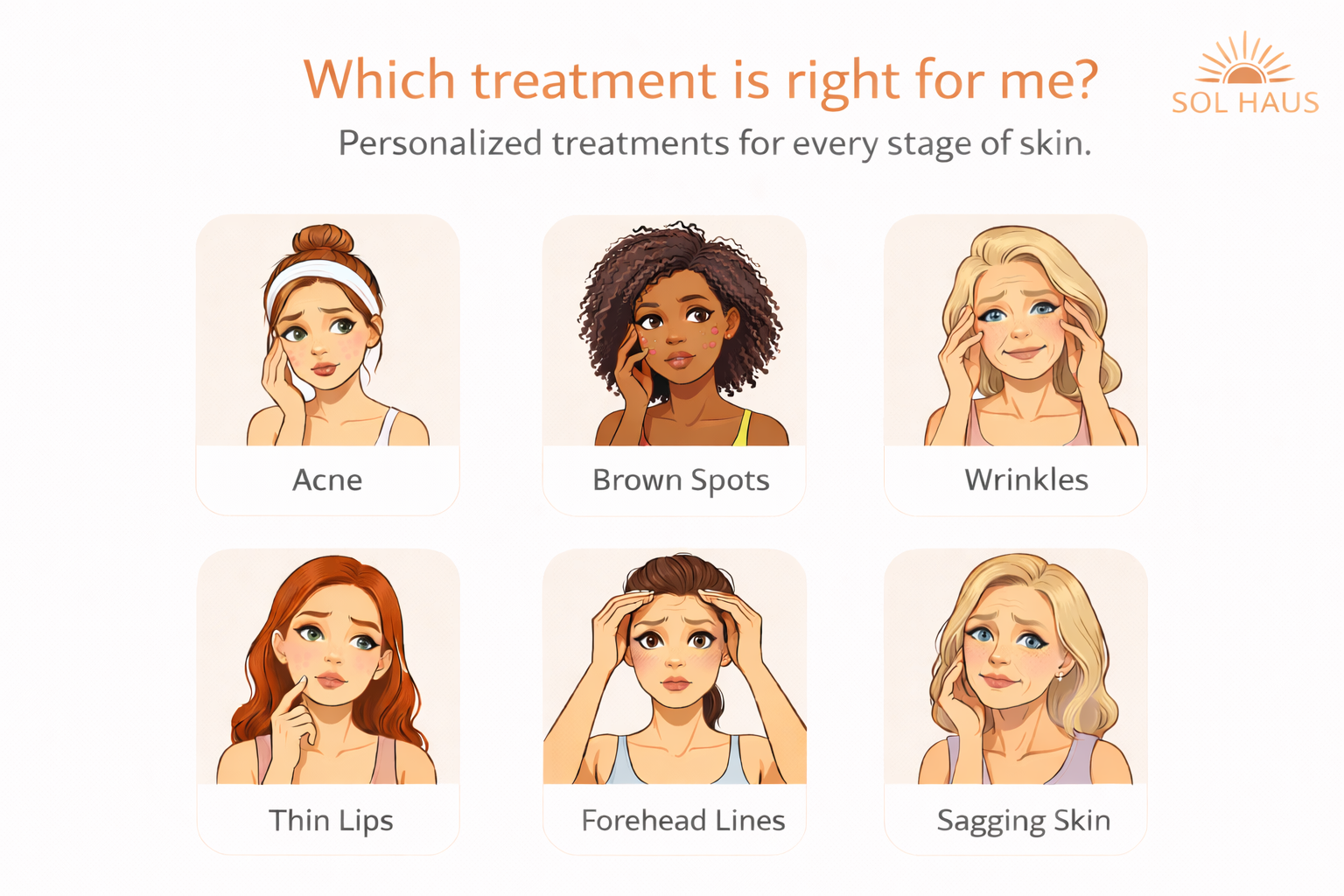

-
• At Sol Haus Aesthetics+Wellness+Boutique, we reduce facial wrinkles using individualized, evidence-based treatments chosen to match each patient’s skin type, concerns, and goals.
Microneedling
How it works: Controlled micro-injuries stimulate collagen and elastin production, improving skin texture and reducing fine lines.
Best for: Superficial lines, uneven texture, enlarged pores, and overall skin rejuvenation.
Treatment course: Series of 3–6 sessions spaced 4–6 weeks apart; maintenance treatments as recommended.
Downtime/side effects: Mild redness and swelling for 24–72 hours; minimal recovery.
IPL (Intense Pulsed Light)
How it works: Broad-spectrum light targets pigmentation and vascular damage, which can soften the appearance of wrinkles and improve skin tone.
Best for: Photo-damaged skin, sunspots, broken capillaries, and superficial lines associated with uneven pigmentation.
Treatment course: Typically 3–5 sessions spaced 3–6 weeks apart.
Downtime/side effects: Temporary redness and darkening of pigmented spots before they flake off.
PDO Threads
How it works: Dissolvable polydioxanone threads provide immediate lift and stimulate collagen production over months, improving sagging and deeper wrinkle lines.
Best for: Nasolabial folds, jowls, marionette lines, and mild-to-moderate sagging.
Treatment course: One procedure with results that improve over 3–6 months and can last 12–18 months or longer depending on the patient.
Downtime/side effects: Bruising, swelling, and mild discomfort for several days to two weeks.
Neuromodulators (Dysport or Botox)
How it works: Botulinum toxin temporarily relaxes targeted facial muscles, reducing dynamic wrinkles caused by repeated expressions (forehead lines, glabellar “11s,” crow’s feet).
Best for: Dynamic lines that appear with facial movement.
Treatment course: Results appear within days and last 3–4 months on average; regular maintenance treatments required.
Downtime/side effects: Minimal; possible temporary bruising or mild drooping when not placed correctly—performed by trained injectors.
Facial Fillers
How it works: Hyaluronic acid or other FDA-approved fillers restore lost volume, smooth static wrinkles, and support soft tissues to reduce deeper creases.
Best for: Nasolabial folds, marionette lines, hollow cheeks, and volume loss contributing to surface wrinkling.
Treatment course: Immediate improvement; duration varies by product (6 months to 2 years).
-
Brown spots and unwanted pigment can be effectively reduced using targeted treatments like IPL (Intense Pulsed Light), chemical peels, and plasma skin treatments. Each method works differently and is chosen based on the type, depth, and cause of pigmentation, your skin type, and treatment goals.
IPL (Intense Pulsed Light)
How it works: IPL emits broad-spectrum light that is absorbed by pigment (melanin) and broken blood vessels. The light energy heats and fragments pigment particles, which are then cleared by the body’s immune system.
Best for: Sun spots, age spots, freckling, and diffuse brown patches on lighter skin types. Also improves redness, broken capillaries, and overall skin tone.
Sessions & downtime: Typically 3–6 sessions spaced 4–6 weeks apart. Mild redness and temporary darkening of spots can occur for a few days; minimal downtime.
Results: Gradual fading over several weeks; maintenance treatments every 6–12 months may be recommended.
Chemical Peels
How they work: Chemical solutions (glycolic, lactic, TCA, salicylic, or blends) are applied to exfoliate and remove outer skin layers. This stimulates cell turnover and reduces superficial pigment.
Best for: Superficial hyperpigmentation, sun damage, uneven texture, and pigmentation caused by melasma (with appropriate peel selection and care).
Strengths & downtime: Light peels require minimal downtime; medium peels (TCA) produce more noticeable peeling and 3–7 days of recovery. Deeper peels have longer downtime and are used less commonly for pigment due to risk of post-inflammatory hyperpigmentation in darker skin tones.
Results: Improvement after one peel with optimal results from a series. Combining peels with topical brighteners enhances outcomes.
Plasma Skin Treatments (Plasma Pen/Plasma RF)
How they work: Plasma devices create a controlled micro-injury using ionized gas energy (or radiofrequency with plasma-like delivery), which triggers collagen remodeling and epidermal renewal. The treatment can pinpoint and lift pigmented lesions and improve skin texture.
Best for: Superficial to moderately deep pigment, sun-damaged skin, and tightening of lax skin around the eyes and face. Useful when precision is needed on small spots or textured pigmented areas.
Sessions & downtime: Often requires 1–3 sessions. Expect a few days to 1–2 weeks of visible healing depending on intensity; crusting of treated points is common and must be cared for gently.
Results: Notable improvement in texture and pigment with progressive collagen remodeling over weeks to months.
Combination approach and individualized plans
Many clients achieve the best results by combining modalities: e.g., IPL or laser for broader areas, chemical peels for superficial blending, and plasma treatments for precise correction and tightening.
Pre- and post-treatment skin prep (topical lightening agents like hydroquinone alternatives, retinoids, sunscreen) reduces risk of rebound pigmentation and improves outcomes.
For darker skin tones or melasma, careful selection of treatment type, lower-fluence settings, and conservative progression are essential to avoid post-inflammatory hyperpigmentation.
Safety and consultation
A tailored consultation evaluates skin type, medical history, current skincare, and sun exposure to choose the safest, most effective option.
Expect guidance on pre-treatment skin preparation, sun avoidance, prescribed topical agents, and post-care to optimize healing and long-term results.
At Sol Haus Aesthetics+Wellness+Boutique we design individualized treatment plans combining IPL, chemical peels, and plasma therapies as appropriate, paired with professional skincare and aftercare to safely reduce brown spots and achieve even, radiant skin.
-
We treat acne scarring with targeted, medical-grade procedures tailored to your skin and goals: Microneedling, Plasma Pen, and PDO Threads.
Microneedling: Controlled micro-injuries stimulate collagen and elastin production to improve texture, reduce pitting, and smooth scars. Ideal for rolling and shallow boxcar scars; can be combined with topical serums or PRP for enhanced results. Multiple sessions spaced several weeks apart are typically recommended.
Plasma Pen: A non-surgical fibroblast treatment that resurfaces the skin by creating precise thermal micro-injuries. Particularly effective for moderate surface scarring and skin tightening, improving overall texture and pigmentation with progressive results over weeks to months.
PDO Threads: Absorbable polydioxanone threads provide structural support and stimulate collagen remodeling beneath the skin. Useful for tethered scars and areas where lifting and volumization are needed to smooth depressed scars.
Your provider will evaluate scar type, skin tone, medical history, and downtime expectations to recommend the best modality or combination plan. Treatment may require a series of sessions and involves minor downtime, post-procedure care, and sun protection to optimize healing and outcomes. For a personalized consultation and treatment plan, schedule an appointment with our medical aesthetics team.
-
We reset sagging skin with targeted, minimally invasive treatments that restore lift, tighten tissue, and stimulate collagen for natural-looking rejuvenation.
PDO Threads (lift and tighten)
What it is: Absorbable polydioxanone (PDO) threads are placed beneath the skin to physically lift drooping tissue and immediately reposition the facial contours.
How it works: Threads provide an instant mechanical lift and act as a scaffold that stimulates new collagen and elastin production over weeks to months.
Ideal for: Mild-to-moderate jowling, cheek descent, lax neck skin, and soft tissue repositioning without surgery.
Benefits: Immediate visible lift, progressive improvement over 3–6 months, minimal downtime, long-lasting results as collagen remodels.
Typical course: Single in-office treatment; results last 12–24 months depending on thread type and individual aging factors.
PDO Liquid Threads
What it is: A cocktail of absorbable PDO threads in a gel-like suspension placed into areas of volume loss to smooth, tighten, and encourage tissue regeneration.
How it works: Liquid threads create a mesh under the skin that prompts collagen formation and subtly contours without larger lifting threads.
Ideal for: Fine surface laxity, superficial crepey skin, and areas where volume and texture improvement are desired without mechanical lifting.
Benefits: Less invasive, natural surface firming, improved skin texture, and collagen stimulation.
Laser Treatments and IPL Combined with Microneedling
What they are: Fractional laser resurfacing or intense pulsed light (IPL) paired with microneedling to address both superficial and deeper layers of the skin.
How the combination works: Microneedling creates microchannels that stimulate collagen and increase penetration; lasers or IPL target pigmentation, vascular issues, and deeper collagen remodeling for comprehensive renewal.
Ideal for: Skin laxity, uneven texture, fine lines, sun damage, broken capillaries, and combined aging signs.
Benefits: Enhanced collagen induction, improved skin tone and texture, reduced pigmentation and redness, and more lifted appearance when combined with collagen-stimulating modalities.
Treatment planning and safety
Individualized approach: We assess skin laxity, tissue quality, medical history, and goals to recommend the optimal modality or combination (PDO lift, liquid threads, laser/IPL + microneedling, or a staged protocol).
Downtime and aftercare: PDO thread procedures typically have minimal downtime (bruising, mild swelling). Combined laser/microneedling may require several days to a week of healing depending on intensity. Aftercare guidance minimizes complications and maximizes collagen response.
Realistic expectations: Immediate improvement with threads and progressive tightening over months. Laser/IPL + microneedling produces gradual improvement over multiple sessions.
Safety: Performed by trained providers using sterile technique and appropriate anesthetic and pre/post-procedure protocols to minimize risk.
Who benefits most
Patients seeking significant improvement without surgery
Those wanting to firm and lift sagging skin while avoiding the downtime and invasiveness of facelift surgery
People with combined concerns—laxity, texture change, pigmentation—who benefit from a multimodal plan
Consultation
We recommend a personalized consultation to evaluate your skin and create a stepwise plan tailored to your goals—whether a single PDO lift, liquid thread texturizing, or a combined resurfacing.
-
Thinnr Weightloss Tincture
What it is: Thinnr is a liquid weight-loss tincture formulated to support appetite control and metabolic function. It combines herbal extracts, vitamins, and botanical compounds designed to be taken sublingually or added to water according to product instructions.
How it works: Ingredients typically focus on suppressing cravings, stabilizing blood sugar, supporting digestion, and providing mild metabolic support. Results are most pronounced when used alongside a calorie-controlled diet, regular activity, and behavior changes. Thinnr is intended as a non-prescription, adjunctive tool for people seeking gradual, sustainable weight loss or extra support during lifestyle changes.
Typical benefits: Reduced hunger and cravings, improved portion control, more consistent energy, and gentle support for metabolic processes.
Who it’s best for: People looking to lose modest amounts of weight, those who prefer botanical/over-the-counter approaches, or clients wanting a non-invasive complement to diet and exercise.
Safety and considerations: Ingredients vary by formulation; always review the label for stimulants (caffeine, synephrine), herb-drug interactions, and allergens. Consult your medical provider if you are pregnant, breastfeeding, have cardiovascular disease, diabetes, high blood pressure, a history of psychiatric conditions, or take prescription medications. Discontinue use and seek medical advice if you experience palpitations, chest pain, severe headache, dizziness, shortness of breath, or mood changes.
GLP-1 Treatments (for more advanced weight loss—typically >30 pounds)
What GLP-1 treatments are: GLP-1 (glucagon-like peptide-1) receptor agonists are prescription medications originally developed for type 2 diabetes that have proven highly effective for weight loss. Common GLP-1 medications used for weight management include semaglutide and tirzepatide (a dual GIP/GLP-1 agonist), though specific brand names and formulations vary. These are administered by subcutaneous injection at intervals determined by the product (weekly for many options).
How they work: GLP-1 agonists mimic a gut hormone that increases feelings of fullness, slows gastric emptying, reduces appetite and food intake, and improves glucose regulation. The combination effect leads to significant, clinically meaningful weight loss when used with lifestyle changes.
Typical benefits: Average weight loss in clinical trials ranges from roughly 10% to 20% (or more) of body weight depending on the medication and dose, with many patients losing 30+ pounds when therapy is supervised and paired with nutrition and activity counseling. Additional benefits can include improved blood sugar control, lower blood pressure, and improved metabolic markers.
Who it’s best for: People with obesity (BMI criteria typically apply) or those with overweight plus weight-related health conditions, particularly when lifestyle measures alone have not delivered sufficient results. Appropriate for patients seeking greater weight loss than over-the-counter or supplement approaches can reliably provide.
Treatment course and monitoring: GLP-1 therapy is prescription-only and initiated under medical supervision. Treatment usually begins at a low dose to reduce gastrointestinal side effects and is gradually titrated to an effective dose. Ongoing follow-up includes monitoring weight, blood pressure, glucose (if diabetic), and potential side effects.
Safety and considerations: Common side effects include nausea, vomiting, constipation, diarrhea, abdominal pain, and decreased appetite—often most noticeable during dose escalation and typically improving over time. Less common but serious considerations include risk of pancreatitis, gallbladder disease, and rare reports of thyroid C-cell tumors in rodents (clinical relevance in humans remains under study). GLP-1s can affect blood glucose; people on diabetes medications or insulin may need dose adjustments to avoid hypoglycemia. Discuss full medical history, current medications, pregnancy plans, and family history of thyroid cancer with your provider before starting therapy.
Choosing between Thinnr tincture and GLP-1 therapy
For modest weight goals or preference for non-prescription, botanical approaches, Thinnr may offer helpful adjunct support.
For people needing substantial weight loss (commonly >30 pounds) or with obesity-related health concerns, GLP-1 receptor agonists are evidence-based, medically supervised options with the largest and most predictable weight-loss outcomes.
A personalized plan—developed with a clinician who can assess medical history, medications, and realistic goals—ensures safe, effective selection and monitoring.
If you’d like, we can schedule a consultation to review your medical history, discuss whether a tincture, GLP-1 therapy, or a combined approach best
-
Using Restylane Eyelight or PDO blunt-tip eye threads can effectively reduce sunken under-eyes, dark circles, and fine wrinkles with minimal downtime.
Restylane Eyelight
What it does: A hyaluronic acid dermal filler specifically formulated for the tear trough and under-eye area. It restores volume, smooths hollows, and improves shadowing that causes dark circles.
Benefits: Immediate visible improvement in volume and contour, natural-looking results, and modest stimulation of skin hydration.
Procedure: Quick in-office treatment typically taking 20–45 minutes. Topical numbing and gentle injection techniques minimize discomfort.
Downtime & recovery: Most clients experience mild swelling, bruising, or tenderness for 1–7 days. Normal activities can usually be resumed the same day with simple post-care (cold compresses, avoid strenuous exercise and alcohol for 24–48 hours).
Ideal candidates: Adults with volume loss in the tear trough, mild to moderate under-eye hollows, and realistic expectations. Not recommended for active infection at the treatment site or certain medical conditions; consult with a qualified provider.
PDO Blunt-Tip Eye Threads
What they do: Polydioxanone (PDO) threads placed with a blunt-tip cannula lift and support the under-eye tissues, stimulate collagen production, and improve skin texture and fine lines.
Benefits: Mechanical lift of the lower eyelid and cheek junction, gradual collagen remodeling for longer-term firmness, minimal trauma because blunt-tip delivery reduces tissue injury.
Procedure: In-office treatment typically 30–60 minutes. Local anesthetic and careful placement with blunt cannulas keep discomfort low.
Downtime & recovery: Mild swelling, bruising, or localized tenderness for several days to a week. Some patients notice mild dimpling that usually resolves as tissues settle and collagen forms. Return to most daily activities quickly; avoid vigorous exercise and facial massage for about one week.
Ideal candidates: Individuals with mild to moderate skin laxity, early tear trough concerns, or those seeking collagen-stimulating lift without more invasive surgery. Not appropriate for active infection or certain medical conditions; consult with a provider.
Combining Approaches
Complementary results: For some patients, combining filler (Restylane Eyelight) to restore volume and PDO threads to lift and support tissues provides more comprehensive improvement—immediate filling plus longer-term collagen remodeling.
Treatment planning: A personalized assessment by a medical provider is essential to determine the best approach, sequence, and product selection based on anatomy and goals.
Safety & Provider Selection
Marie Finger has tread of experience and has taken care of 1000’s of happy clients. Marie is an excellent provider and experienced injector with specific training in periorbital anatomy and these techniques.
Discuss medical history, prior procedures, allergies, and expectations during a consultation.
Understand potential risks: bruising, swelling, asymmetry, lumpiness (for fillers), infection, and rarely vascular complications with fillers. PDO thread-specific risks include thread migration or visibility and transient dimpling.
At Sol Haus Aesthetics+Wellness+Boutique we offer expert consultations to determine whether Restylane Eyelight, PDO blunt-tip eye threads, or a tailored combination is right for you. Book a consultation to review your anatomy, goals, and a personalized treatment plan.
-
Restylane and Restylane Kysse are two effective hyaluronic acid-based dermal fillers designed to address lip dryness, fine lines, and volume restoration.
Restylane:
Best for subtle lip enhancement and smoothing perioral lines.
Adds hydration and improves texture by attracting and holding moisture in the skin.
Provides natural-looking volume with a balance of support and flexibility.
Results typically last several months; longevity varies by individual and treatment area.
Restylane Kysse:
Specifically formulated for the lips and adjacent lines, engineered to move naturally with facial expressions.
Targets both hydration and fuller, softer lip volume while minimizing stiffness.
Particularly effective at improving lip texture, reducing dryness, and smoothing vertical lip lines.
Often preferred when a more natural, flexible feel is desired; results can last up to a year depending on metabolism and lifestyle.
What to expect:
Consultation to assess goals, anatomy, and appropriate product choice.
Treatment involves precise injections, minimal downtime, and temporary side effects such as mild swelling, bruising, tenderness, or redness.
Post-treatment care includes avoiding strenuous exercise, excessive heat, and certain medications or supplements that increase bleeding for 24–48 hours, and following any aftercare instructions provided by your clinician.
Contraindications and precautions:
Not recommended if pregnant, breastfeeding, or with active oral infections (e.g., cold sores).
Inform your provider of allergies, medications, history of keloid scarring, or autoimmune conditions.
Discuss expectations, potential risks (infection, asymmetry, nodules, vascular occlusion), and emergency signs like severe pain or changes in skin color.
At Sol Haus Aesthetics + Wellness + Boutique we offer personalized consultations to determine whether Restylane or Restylane Kysse best suits your goals and to create a safe, tailored treatment plan.
-
Cheeks can lose volume and definition over time, appearing hollowed or sunken compared with your younger self. Restylane Contour and PDO/PLLA thread treatments restore lost structure and lift, bringing back a fuller, more youthful cheek profile.
Restylane Contour: A hyaluronic acid filler designed to restore midface volume and redefine the cheek’s natural contour. It provides immediate lift and smooths hollowness while preserving natural movement and expression.
PDO threads: Dissolvable sutures that mechanically lift sagging tissue and stimulate collagen production for gradual, sustained improvement in firmness and support.
PLLA threads (and PLLA stimulatory treatments): Promote deeper collagen remodeling over time, improving skin thickness and long-term restoration of cheek fullness.
Combined, these options can:
Rebuild volume and projection in the midface
Smooth hollowed areas and soften shadowing
Restore youthful cheek contours while maintaining natural facial expressions
Deliver both immediate lift (fillers/threads) and progressive collagen-driven improvement (PDO/PLLA)
Treatment choice depends on your anatomy, degree of volume loss, skin quality, and desired downtime. At Sol Haus Aesthetics+Wellness+Boutique we evaluate your facial structure and create a personalized plan—sometimes combining Restylane Contour with threads—to achieve balanced, natural-looking cheek rejuvenation.
-
Plasma pen is great for eyelid tightening or PDO eye threads.
At Sol Haus Aesthetics+Wellness+Boutique, we often compare plasma pen and PDO eye threads for eyelid tightening so you can choose the best option for your goals and downtime tolerance.
Plasma Pen (Fibroblast)
Best for: Mild-to-moderate skin laxity, fine lines, and surface tightening of the upper and lower eyelids without surgery.
How it works: A handheld device creates tiny controlled micro-injuries (plasma sparks) to the skin surface, stimulating collagen and elastin remodeling and causing immediate tissue contraction.
Results: Gradual improvement over 6–12 weeks as new collagen forms; results can last 1–3 years depending on skin quality and lifestyle.
Downtime: Moderate—usually 5–10 days of visible crusting and redness; swelling may last up to 2 weeks.
Advantages: Non-surgical, precise targeting, excellent for skin tightening and texture improvement.
Considerations: Not ideal for very heavy eyelid hooding or thick excess skin; must avoid direct treatment on the inner eyelid (lid margin). Risk of pigment changes in darker skin tones; proper candidate assessment is essential.
PDO Eye Threads
Best for: Lifting and supporting mild-to-moderate eyelid hooding and sagging; can provide structural lift to the brow and upper cheek area.
How it works: Dissolvable polydioxanone (PDO) sutures are inserted under the skin to mechanically lift tissue and stimulate collagen production along the thread path.
Results: Immediate lift with continued improvement over 3–6 months; results typically last 9–18 months depending on thread type and individual factors.
Downtime: Mild—bruising and swelling for several days; minimal crusting. Some temporary puckering at entry sites.
Advantages: Provides an immediate mechanical lift plus collagen stimulation; better for repositioning tissue than surface-only treatments.
Considerations: Less effective for fine surface wrinkles and skin texture vs. plasma pen; technique-sensitive and requires experienced injector to avoid visible threads or irregularities.
Which is right for you?
If your main concern is skin texture, fine lines, and surface tightening without implants or lifts, plasma pen is an excellent choice.
If you need a structural lift to reposition sagging tissue or hooding (especially when combined with brow ptosis), PDO eye threads may be more appropriate.
In many cases, a combined approach delivers superior outcomes: threads for lift and plasma pen for refined surface tightening and texture improvement.
Consultation Book a personalized consultation with our licensed providers to assess eyelid anatomy, skin type, medical history, and aesthetic goals. We’ll explain risks, expected downtime, pre/post-care, and create a tailored plan—whether that’s plasma pen, PDO eye threads, or a combined protocol.
At Sol Haus Aesthetics+Wellness+Boutique, safety and natural-looking results are our priority.
-
TCA Peels A TCA (trichloroacetic acid) peel is a chemical peel that resurfaces the skin by removing damaged outer layers and stimulating collagen remodeling in the dermis. For perioral lines and wrinkles, a light-to-medium TCA peel softens fine lines around the mouth, evens skin texture, and reduces pigment irregularities that can make lines look deeper. By promoting controlled exfoliation and new collagen formation, TCA peels improve skin thickness and elasticity, which helps lines appear smoother and less noticeable. Multiple treatments spaced appropriately produce cumulative improvement in both texture and wrinkle depth.
PDO Lip Threads PDO (polydioxanone) lip threads are absorbable sutures placed under the skin to lift, support, and stimulate collagen production. For perioral concerns, PDO threads can provide subtle lift to the corners of the mouth, reduce the appearance of vertical “smoker’s” lines, and restore definition to the vermillion border. The mechanical support of the threads immediately refines contours and reduces shadowing that accentuates wrinkles, while the subsequent neocollagenesis (new collagen formation) firms the treated area over weeks to months, improving long-term texture and reducing wrinkle depth.
Carbon Laser (Carbon Peel) A carbon laser peel combines a topical carbon layer with a laser to exfoliate, clarify, and stimulate collagen. The carbon binds to debris, oil, and dead skin; when the laser pulses, it vaporizes the carbon along with impurities and delivers controlled thermal energy to the epidermis and superficial dermis. For perioral lines, this treatment refines skin texture, minimizes pore size, and promotes collagen remodeling, which helps soften fine lines around the mouth. It also improves overall skin tone and brightness, reducing the contrast between lines and surrounding skin so wrinkles look less pronounced.
Microneedling Microneedling uses fine needles to create controlled micro-injuries in the skin, triggering a natural wound-healing response and stimulating collagen and elastin production. When performed around the mouth, microneedling improves fine lines, crepey texture, and superficial wrinkles by increasing dermal thickness and elasticity. It enhances skin smoothness and firmness, which diminishes the depth and visibility of perioral lines. Microneedling also improves product absorption, so combining it with topical growth factors or serums can amplify collagen-stimulating effects and accelerate visible improvement.
Restylane Silk Restylane Silk is a hyaluronic acid dermal filler formulated with smaller, smoother particles designed for subtle lip enhancement and softening of fine lines. For perioral lines, Restylane Silk gently fills and supports the grooves and vertical lines around the mouth and can subtly augment the lips to restore lost volume and improve border definition. The added volume smooths surface depressions, reduces shadowing, and restores a more youthful contour, resulting in immediate reduction of wrinkle appearance with natural-looking movement appropriate for the delicate perioral area.
Combination and expected outcomes Each treatment addresses perioral lines through different mechanisms—exfoliation and resurfacing (TCA, carbon laser), structural support and lifting (PDO threads, filler), and collagen induction (microneedling, threads). Combining therapies in a tailored plan often yields better, longer-lasting results than a single approach: resurfacing improves skin texture and pigment, collagen stimulators build dermal support, and fillers or threads restore volume and contour. Typical outcomes include smoother skin texture, reduced depth of vertical lines, improved lip definition, and overall rejuvenated perioral appearance. Treatment frequency and a personalized sequence depend on goals, skin condition, and desired downtime.
-
Depending on the degree of drooping at the corners of the mouth, several treatments can help create a lifted, more refreshed appearance:
PDO threads: Best for moderate to more pronounced sagging. Threads provide a mechanical lift by repositioning tissue and stimulating collagen production. Results can be noticeable immediately and improve over several months as new collagen forms. Ideal when skin laxity is a primary contributor.
Restylane Lyft (or similar hyaluronic acid fillers): Effective for restoring lost volume and supporting the perioral and marionette areas. Fillers can subtly elevate the mouth corners by adding volume to the adjacent cheeks, nasolabial folds, or directly at the marionette lines. Results are immediate and last several months to over a year depending on product and individual metabolism.
Dysport or Botox (neuromodulators): Best for mild drooping caused by overactive depressor muscles (such as the depressor anguli oris). Small, targeted injections relax the downward-pulling muscles, allowing elevators (like the zygomaticus muscles) to lift the corners of the mouth. Effects typically appear within a few days to two weeks and last about 3–4 months.
Combination approaches often give the most natural, long-lasting results—for example, neuromodulator to relax downward pull, filler to restore support and volume, and PDO threads when additional structural lift and collagen stimulation are needed. Treatment choice should be tailored to your anatomy, severity of descent, skin quality, and aesthetic goals. A consultation with a qualified provider will determine the optimal plan and sequencing.
-
PDO threads, Botox, and Dysport are effective options for addressing tight neck muscles and improving the appearance of platysma bands. Each treatment works differently and may be recommended alone or in combination depending on your goals, anatomy, and desired downtime.
How they work
PDO threads: Absorbable polydioxanone threads are placed under the skin to provide immediate mechanical lift and stimulate collagen remodeling. For the neck, PDO threads can tighten lax skin, improve contour, and offer some support to the platysma region. They are especially useful when skin laxity and vertical banding coexist.
Botox/Dysport: These neuromodulators relax the platysma muscle by blocking nerve signals, softening vertical platysmal bands and reducing neck strain. Results typically appear within a few days to two weeks and last about 3–5 months (Dysport sometimes acts faster and can last similarly). Neuromodulators can also reduce a “turkey neck” appearance caused by overly active platysma contractions.
When to choose one vs. the other
Predominant muscle activity/visible bands with relatively good skin elasticity: Botox or Dysport can be very effective and are minimally invasive with quick recovery.
Significant skin laxity, loss of jawline definition, or mild sagging: PDO threads can address both contour and skin quality, offering longer-term structural improvement through collagen stimulation.
Combined issues (muscle bands plus moderate laxity): A combined approach often gives the best outcome—neuromodulator injections to soften platysma bands and PDO threads to lift and tighten skin.
What to expect
Consultation: Assessment of neck anatomy, platysma activity, skin quality, medical history, and aesthetic goals.
Procedure time: Botox/Dysport injections take about 10–20 minutes. PDO thread placement generally takes 30–60 minutes depending on extent.
Discomfort & anesthesia: Botox/Dysport injections involve minimal discomfort. PDO threads typically use local anesthesia and may include topical numbing.
Downtime: Botox/Dysport has little-to-no downtime; avoid strenuous activity for 24 hours. PDO threads may cause swelling, bruising, or mild soreness for several days to 2 weeks; most people can return to normal activities within a few days.
Results timeline: Botox/Dysport shows improvement in days to two weeks. PDO thread lift gives immediate lifting with progressive improvement over 2–3 months as collagen forms; results can last 12–18 months or longer depending on threads used and individual factors.
Risks and considerations
Botox/Dysport: Possible temporary weakness of nearby muscles, asymmetry, bruising, and rarely trouble swallowing if injections are misplaced.
PDO threads: Possible bruising, swelling, infection, thread migration, visible or palpable threads, or temporary dimpling. Choosing an experienced provider reduces these risks.
Not all candidates are ideal: Severe neck laxity or excess fat may be better addressed with surgical neck lift or liposuction.
Next steps Schedule a consultation for a personalized assessment. We will evaluate platysma band severity, skin laxity, and your goals to recommend Botox or Dysport, PDO threads, a combined plan, or surgical referral if appropriate.
-
PDO Brow Threads or for moderate drooping — Botox or Dysport
Which treatment is right for you depends on the cause and degree of brow droop, your goals, and how long you want the results to last. Below is a concise comparison to help you decide.
PDO Brow Threads
What they do: Dissolvable polydioxanone (PDO) sutures are placed under the skin to mechanically lift and anchor the brow. They also stimulate collagen production over weeks to months for a firmer lift.
Best for: Mild to moderate lateral brow descent, someone seeking immediate lift without neurotoxins, and patients who want some collagen remodeling.
Results: Immediate lift visible; improvement continues for 2–3 months. Threads dissolve by about 6–9 months, while collagen remodeling can sustain improvement for up to 18 months in some people.
Downtime & side effects: Mild swelling, bruising, soreness at entry points; possible temporary dimpling or asymmetry that typically resolves. Rare risks: infection, thread migration, or palpability.
Procedure time: 30–60 minutes.
Longevity: Often up to 18 months depending on individual healing and thread type.
Ideal candidate: Good skin quality with mild–moderate laxity who prefers a mechanical lift and collagen stimulation.
Botox or Dysport (neuromodulators)
What they do: Botulinum toxin relaxes targeted muscles (typically the corrugator, procerus, and lateral orbicularis oculi) to reduce muscle pull that causes brow lowering and dynamic lines.
Best for: Moderate drooping caused primarily by hyperactive muscles rather than significant skin laxity; excellent for softening dynamic frown lines and achieving a subtle brow lift.
Results: Begin in 2–7 days, with full effect around 2 weeks.
Downtime & side effects: Minimal—temporary bruising, mild headache, or transient asymmetry. Rare risks: ptosis (drooping) if injected incorrectly.
Procedure time: 10–20 minutes.
Longevity: 3–4 months (Dysport may appear sooner and sometimes last longer in some patients).
Ideal candidate: Someone with good skin elasticity whose brow droop is largely from muscle activity and who prefers a quick, minimally invasive treatment with predictable, repeatable results.
When to combine
Combining PDO threads with Botox/Dysport can be complementary: threads provide structural lift and collagen support while neuromodulators reduce muscle activity that pulls the brow down. Many patients achieve a more durable, natural-looking lift with combination therapy.
How to choose
If skin laxity is the main issue and you want an immediate mechanical lift plus collagen stimulation → PDO Brow Threads.
If dynamic muscle pull is the main cause and you want a quick, minimally invasive treatment → Botox or Dysport.
If you have both laxity and hyperactive muscles → consider combining treatments.
Consultation recommendation Schedule a consultation with a qualified injector Marie Finger to assess brow position at rest and during animation, skin quality, facial proportions, and to discuss realistic outcomes, risks, and aftercare. At Sol Haus Aesthetics+Wellness+Bout